| dong ling cao, 冬凌草 ,冰凌草
(In English and Chinese 中英文) by: Joe Hing Kwok Chu
Pharmaceutical name: 英文藥名: | Herba Rabdosime Rubescentis |
Biological name: 拉丁學名: | Rabdosia rubescens (Hemsl.) S.Y. Wu et Hsuen | Pron. in Japanese: 日語發音: | tou rin so | Pron. in Cantonese: 粤語發音: | dung1 ling4 cou2 | | Other Name: 別名: | 1. bing ling cao (冰凌草), meaning 'ice grass' because of the portions of stems near the ground are frozen during winter. 2. po xue cao (破血草) 3. liu yue ling (六月令), 4. academically called sui mi ya (碎米亞) in Chinese. | | Common Name: 英文名: | blushred rabdosia
| | Distribution: 分佈: | mainly in Henan province and areas south of Yellow River Valley (China). 主産於:河南省與黄河流域以南。 | | Properties (characteristics): 性味: | Bitter and sweet in taste, slightly cold. 苦,甘,微寒。 | | Channels (meridians) entered: 歸經: | stomach, lung and liver. 胃,肺,肝。 | | Actions & Indications: | Clears heat and toxins, nourish yin, remove blood stasis and relieve swelling, relieves pain. Being used in cancer of esophagus, and cardia; breast and liver. For swelling of throat, insect bites, snake bites, and inflammation of the tonsils. It is effective for epithelial hyperplasia of esophagus; for stomach ache due to stomach-heat, inflammation of the throat, hot cough , mammary abscess, chronic bronchitis, chronic inflammation of the pelvic area.
清熱解毒,養陰,化瘀,消腫,減輕疼痛。
用於食道癌,賁門癌,乳腺癌和肝癌,腫痛,蚊叮蟲咬,蛇咬傷,扁桃體發炎腫脹。
食管上皮增生;胃熱而胃痛,發炎腫痛,熱咳,乳腺膿腫,慢性支氣管炎,慢性盆腔炎。 | | Medical Function: |
1. Its active ingredients rubescensine A (C20H28O6 molecule weight 364.42) and rubescensine B can inhibit the synthesis of deoxyribonucleic acid and protein of cancer cells. They showed to inhibit Ehrlich-Ascites tumors, sarcoma180 and esophageal carcinoma in laboratory animals.
2. Relieves esophagismus induced by acetylcholine
3. Possesses anti-bacterial function, and rids of parasites and kills insects
1。其冬凌草甲素(C20H28O6分子量364.42)冬凌草乙素的活性成分能抑制癌細胞的脫氧核糖核酸和蛋白質的合成。它們表現能抑制實驗動物的艾氏腹水瘤,肉瘤和食管癌。
2。減輕由乙酰膽鹼誘導的食管痙攣。
3。具有抗菌功能,驅除寄生蟲,並殺死害蟲。 | | Samples of formulae: | To be loaded. If you need the information in a hurry you can email our Research Librarian | | Dosage: | 30 to 60 g per day for internal use. No established amount for external use. Use accordingly. | | Chemical ingredients: | The stems and leaves contain vaporizing oil. The ingredients of the oil include: α-Pinene (α-蒎烯) 1%, β-Pinene (β-蒎烯)0.16~1%,Limonene (擰檬烯) 0.16%, 1.8 - Cineole (1.8-桉油素) 0.33%, P-Cymene (對 -聚傘 花素)0.16%, Nonaldehyde (壬 醛) 1.33%,Decanal (癸醛) 1%b, β- Elemene (β- 攬香烯)20.23%, Palmatic acid (棕欄 酸) 6.6%. Oridinin (冬凌草甲素, 延命草寧 ),Ponicidin (冬凌草乙素), C20H26O6 (冬凌草丙素), C20H30O6 (冬凌草丁素), 己素, C23H32O6 (冬凌草戊素), α-Amyrin (α-香脂醇) and five other ingredients of unknown structures. The roots, stems and leaves contain trace minerals of iron, zinc (鋅), manganese (錳), copper (銅), chromium (鉻), nickel ( 鎳), cobalt (鈷), molybdenum ( 鉬), selenium (硒) etc. |
| Modern Research: |
1. Its components rubescensine A and B inhibit Ehrlich-Ascites tumor, sarcoma180 and esophageal carcinoma in laboratory animals.
2. Relieving esophagismus induced by acetylcholine. | | Cautions: | |
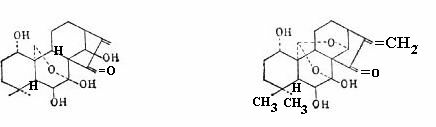
..............
Oridinin (冬凌草甲素) Ponicidin (冬凌草乙素) 註: 本 品在列朝藥典中並没收錄。冬凌草是 河南淇縣淇河兩岸所産。是當地民間用藥。於1972年與1977年被收入中 華人民共和國藥典。Note: This herb was not listed in herbal dictionaries of previous dynasties. It was made public from the folk medicine of the district of Qi , Henan province of China in 1972 and in 1977 it was listed in the Medical Dictionary of the Republic of China (中華人民共和國藥典).Sponsors' Ads by Google 以下為谷歌所提供贊助者之廣告 Last update:
July 16, 2012; 3:42 p.m. LAH |